Simoun aircraft
Promise at DawnThe Simoun aircraft is the vehicle Romain Gary tries, unsuccessfully, to seize at Meknès in order to reach Gibraltar. Its brief appearance turns an escape plan into a test of nerve: he cannot get the propeller turning, yet after fleeing the airfield he regards the attempt as the moment his break with the armistice became real.
The aircraft and the escape plan
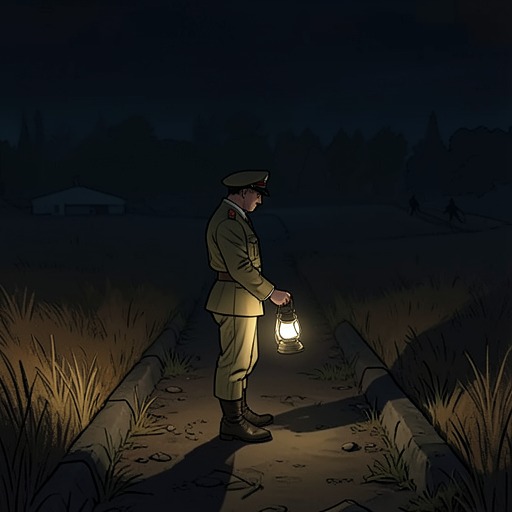
After efforts to obtain false papers from the British Consul fail, the narrator decides to take an aircraft by force if necessary and fly to Gibraltar. He has been loitering on the airfield, looking for a usable plane or an engineer willing to help. The arrival of a Simoun seems to offer the chance he has been waiting for: the pilot leaves it and walks toward the hangar, leaving the aircraft only a few yards away.
The opportunity is more compelling than his preparation warrants. His training has taken him no further than the Morane and the Potez-540, and he is far from certain that he can get the Simoun into the air or keep it there. Even as he approaches, he thinks about whether he could arrange a regular supply of insulin for his mother through the Red Cross in London, since she could not last three days without her injections.
The failed attempt at Meknès
The narrator climbs into the cockpit and takes the controls, believing no one has seen him. In fact, gendarmes of the special air police have been stationed across the field to prevent desertions. Two emerge from a hangar and run toward him; one draws his revolver. They are within thirty yards, and the narrator still cannot get the propeller to turn. He makes one last effort, then jumps out.
A dozen airmen watch as he runs past without trying to stop him. He too has drawn his revolver, a desperate gesture that, he recognizes, would have done him no good at a court-martial. He believes he would not have allowed himself to be captured alive, and later shudders at what might have happened if he had not escaped. Instead, after hiding the weapon, he slows down despite the whistles behind him, walks past the guard at the gate, and reaches the main road. A bus stops when he plants himself in its path; he boards and sits beside two veiled women and a bootblack.
What the Simoun attempt changes
The aircraft remains behind, and the plan to fly it to Gibraltar comes to nothing. But the narrator gives the failed seizure a different consequence: once aboard the bus, he feels that he has consummated his break with the armistice. He imagines his mother looking at him with pride, smiles, and silently celebrates with her in his mind. The aircraft’s failure therefore marks both the limits of his practical control and the beginning of a newly adopted identity: in his own account, he has become a rebel, even though he still has no idea what he will do next.
Narrative significance
The Simoun is not merely transport in this episode. It concentrates the distance between a bold intention and an uncertain capacity: the narrator has resolved to escape, but has never flown this aircraft and cannot even start its propeller before the police arrive. The swift passage from cockpit to flight on foot, then to the bus, shifts the scene’s measure of success. He has not reached Gibraltar, but he experiences the attempt itself as a point of no return. His imagined exchange with his mother makes that inner change inseparable from the approval and courage he associates with her.